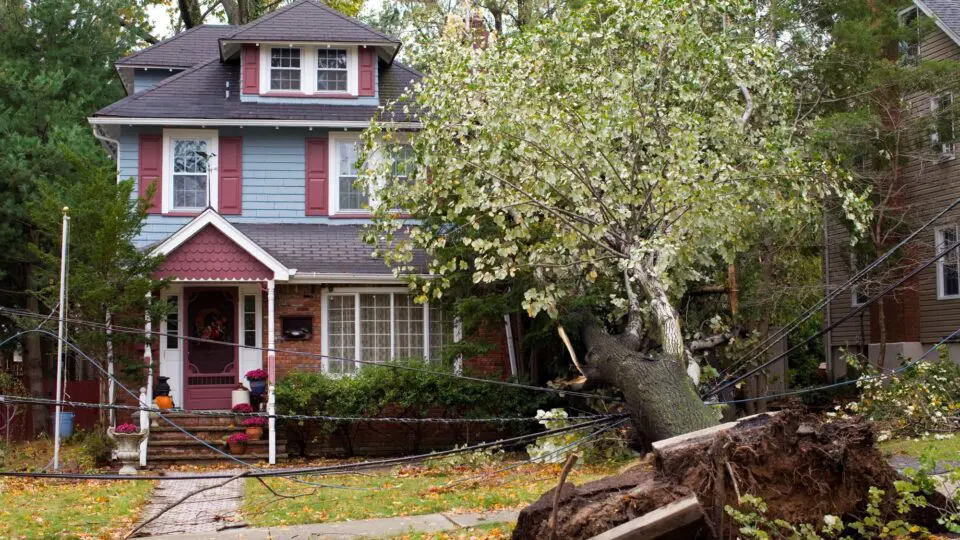
After every major windstorm in Nova Scotia, the same question comes up: What happens if my neighbour’s tree falls on my property?
With storms like Hurricane Fiona and Hurricane Dorian reminding us how vulnerable trees are to high winds, many homeowners are surprised to learn that the answer isn’t always as straightforward as “the tree owner pays.”
If a tree crashes through your roof, damages your fence, or lands in your yard, understanding the typical home insurance process can reduce stress and confusion during an already difficult situation. Before we get started, if you are preparing for a storm or severe weather event while reading this, also check out our storm preparation essentials blog.
The Common Misconception: “It’s Their Tree, So They Pay”
Most people assume that if a tree came from a neighbour’s property, their insurance should automatically cover the damage. In reality, home insurance generally works differently.
In most situations, the owner of the damaged property files a claim with their own insurance company, regardless of where the tree originated. If your neighbour’s healthy tree falls onto your home during a windstorm, your home insurance policy would typically cover damage to your insured property. The same principle generally applies if your own tree falls on your neighbour’s home—they would contact their insurer first.
When Your Home Insurance May Help
Your insurance may help if a fallen tree damages an insured structure such as your: home, garage, shed, fence or deck. Your home insurance policy will often cover repairs resulting from a covered event such as wind, lightning, or severe weather. Coverage may also include debris removal, depending on your policy wording and the circumstances of the loss.
However, every policy is different, so it’s important to review your coverage with your insurance broker if you’re unsure what is included.
What If the Tree Doesn’t Damage Anything?
This is where homeowners are often caught off guard.
If a tree falls into your yard but doesn’t damage a covered structure, insurance may not cover the cost of removing it. In many cases, it’s the homeowner’s responsibility to arrange and pay for cleanup themselves.
For example:
- A large spruce falls into your backyard after a storm but misses your home.
- A tree lands in a wooded area of your property without damaging structures.
- Branches scatter across your lawn but cause no property damage.
Depending on your policy, these situations may not trigger coverage.
The Exception: Negligence
There is one important circumstance where the owner of the tree may be held responsible.
If a tree was obviously dead, diseased, damaged, or otherwise hazardous and the owner knew—or reasonably should have known—about the risk, negligence could become a factor. In those situations, an insurer may investigate whether the tree owner failed to take reasonable steps to address a known danger.
Examples could include:
- A dead tree that has been leaning for years.
- Visible rot or major structural damage.
- Previous complaints or warnings about the tree’s condition.
- Failure to remove a tree after a professional assessment identified it as dangerous.
If negligence can be proven, the insurer of the damaged property may try to recover costs from the tree owner’s insurer. This process happens largely between insurance companies and can be difficult to establish without evidence.
What Should You Do After a Tree Falls?
If a tree damages your property, here is some guidance on what to do next:
1. Put Safety First
Stay clear of downed power lines and unstable trees or branches. If electrical hazards are present, contact Nova Scotia Power or emergency services immediately.
2. Document the Damage
Take photos and videos before moving debris whenever it is safe to do so. Documentation can help support your insurance claim.
3. Prevent Further Damage
If possible, take reasonable steps to protect your property from further damage, such as covering exposed areas of the roof with a tarp.
4. Contact Your Insurance Broker
Your broker can explain what your policy covers, guide you through the claims process, and help coordinate next steps with your insurer.
5. Keep Receipts
Save receipts for emergency repairs, temporary accommodations, or cleanup expenses that may be eligible under your policy.
Extreme weather events can leave you feeling scared and out of control. For more peace of mind, learn how you can protect your home before, during, and after a storm.
How to Reduce the Risk Before Storm Season
Nova Scotia homeowners know that hurricane season and winter storms can put significant stress on trees.
A few preventative measures can help reduce the likelihood of a future claim:
- Inspect trees regularly for signs of disease or decay.
- Remove dead or damaged branches.
- Hire a qualified arborist if you’re concerned about a tree’s health.
- Address neighbour concerns promptly if they raise issues about a potentially dangerous tree.
- Document inspections and maintenance work.
Proactive tree maintenance can help protect your property, your neighbours, and potentially reduce disputes if a storm causes damage. Read more on best practices to prevent common home insurance claims in our previous blog.
When a tree falls on your property, the answer isn’t always determined by who owns the tree.
In many situations, your own home insurance policy responds to damage to your property—even if the tree came from next door.
If you’re unsure whether your home insurance provides adequate protection against storm-related damage, speak with one of our expert Bauld Insurance advisors who can help you understand your coverage before the next major Nova Scotia storm arrives.


